Technologies & Modes
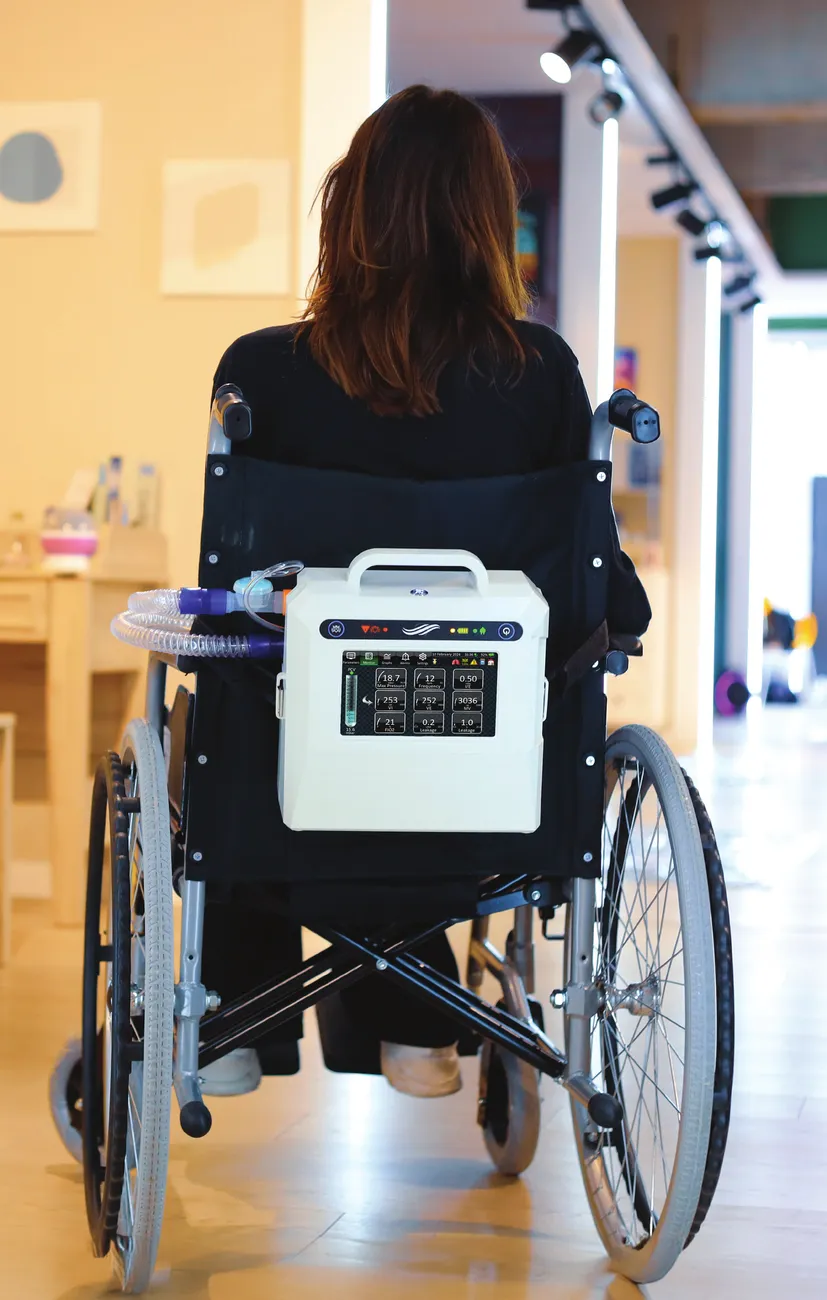
A ventilator is only as good as the breaths it delivers. Ventisense offers ten ventilation modes spanning the full spectrum of support — and because the control software, sensors and electronics are all developed in-house, we can show exactly how each one behaves, breath by breath.
Mandatory ventilation
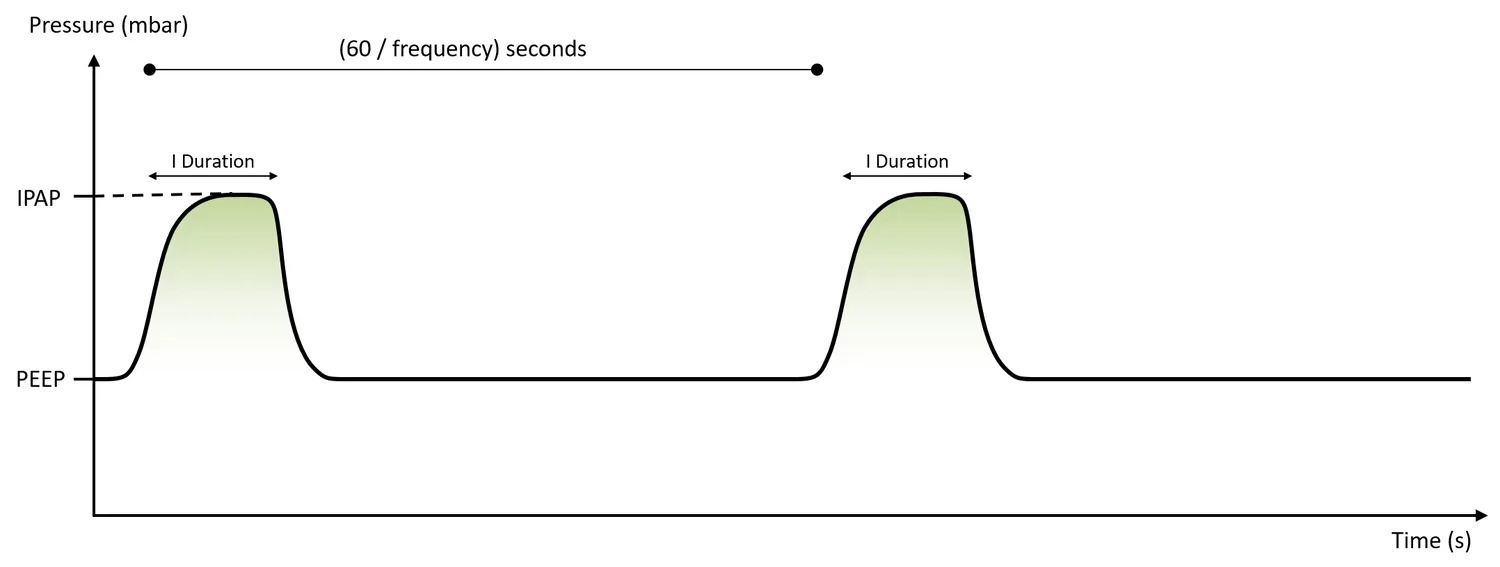
Pressure Controlled Ventilation
The device delivers every breath on a fixed respiratory rate and inspiratory time, holding a set inspiratory pressure against PEEP. Because pressure is the controlled variable, peak airway pressure stays predictable while delivered volume follows the patient’s lung compliance and resistance. It suits fully controlled ventilation where limiting pressure is the priority, such as protective strategies in stiff lungs.
Mode details
Volume Controlled Ventilation
A preset tidal volume is delivered every cycle on a fixed rate and inspiratory time, guaranteeing minute ventilation. Here volume is the controlled variable, so inspiratory pressure rises and falls with compliance and resistance. It is the mode of choice when a precise, assured volume matters more than capping pressure.
Mode detailsAssisted ventilation

Assisted Pressure Controlled Ventilation
Pressure-controlled breaths that the patient can trigger. Each detected effort opens a breath at the set inspiratory pressure, so the patient can raise the total rate above the backup setting while inspiratory time stays fixed. It bridges full control and spontaneous breathing for patients who have some respiratory drive.
Mode details
Assisted Volume Controlled Ventilation
Volume-controlled breaths the patient can trigger. The set tidal volume is delivered on every breath, whether mandatory or patient-initiated, so minute ventilation is assured while the patient can drive the rate. Inspiratory time remains device-defined.
Mode detailsSynchronized intermittent mandatory
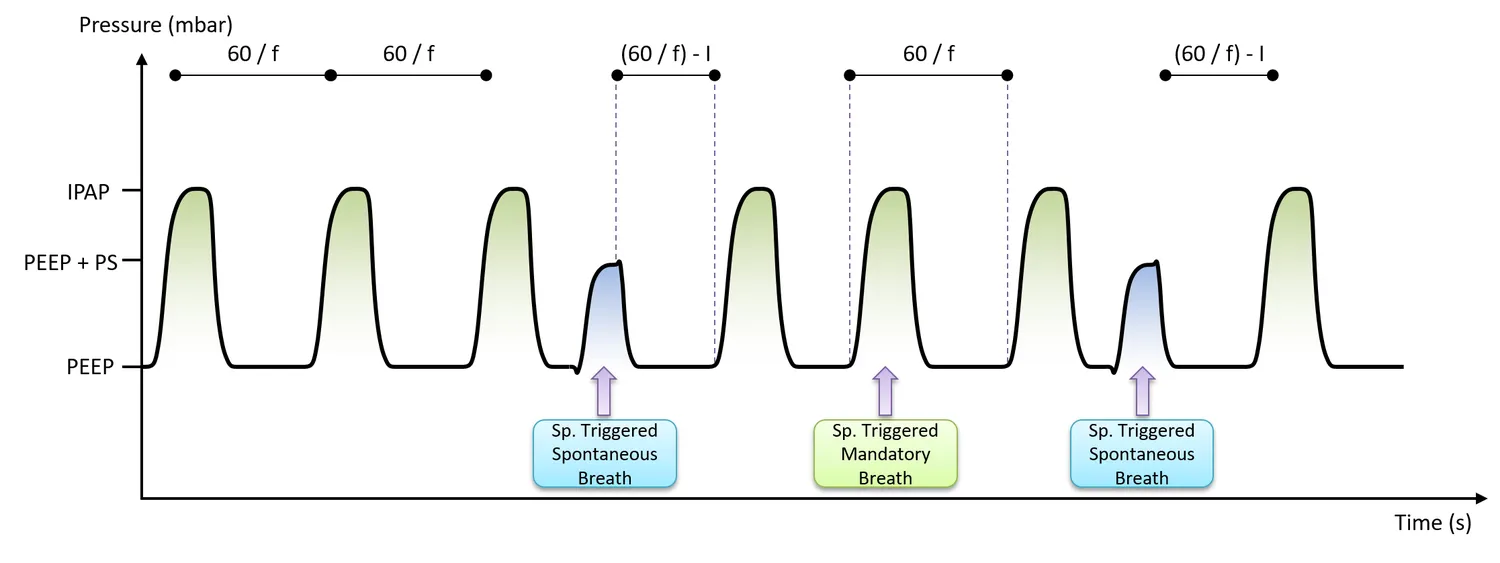
Synchronized IMV — Pressure
Combines mandatory and spontaneous breathing. Inside the synchronization window the device delivers a pressure-controlled mandatory breath in step with the patient’s effort; between mandatory breaths, spontaneous breaths are pressure-supported. The blend improves patient–device synchrony and supports gradual weaning.
Mode details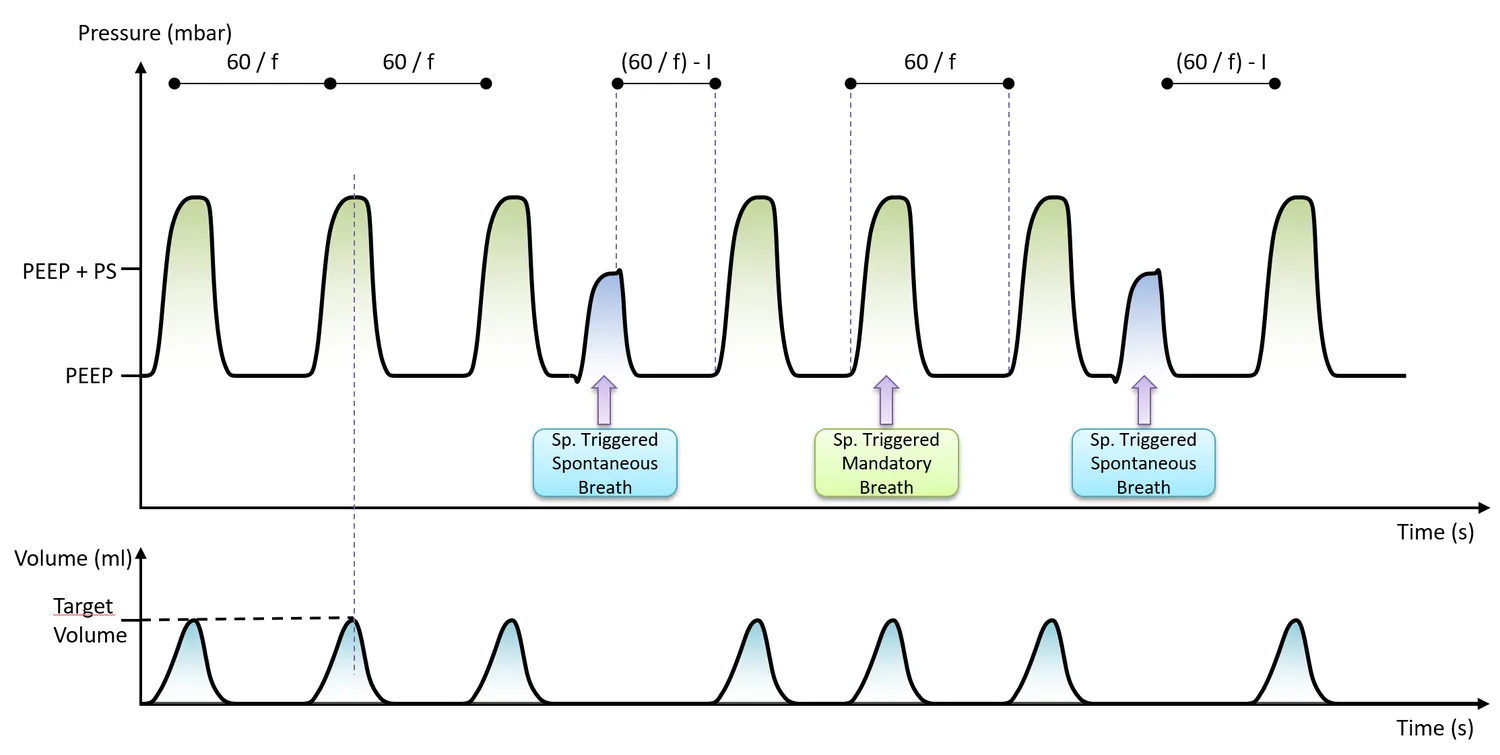
Synchronized IMV — Volume
The volume-targeted form of SIMV: mandatory breaths deliver a set tidal volume synchronized to patient effort within the trigger window, while spontaneous breaths receive pressure support. It balances guaranteed volume with active patient interaction and is well suited to weaning.
Mode detailsSpontaneous & support

Pressure Support Ventilation
A purely spontaneous mode: every patient-triggered breath is boosted with a set pressure support, and the breath is flow-cycled — it ends when inspiratory flow falls to a set fraction of its peak. An apnea backup engages if no effort occurs in time. PSV unloads the work of breathing while leaving the patient in control of rate and timing.
Mode details
BiLEVEL
Manages two pressure levels — a higher inspiratory (IPAP) and a lower expiratory (EPAP) — and lets the patient breathe freely at both. Spontaneous efforts are supported without imposing mandatory breaths, keeping the airway open and assisting ventilation comfortably across a range of needs.
Mode details
Continuous Positive Airway Pressure
Applies one continuous positive pressure while the patient breathes entirely on their own, with no added inspiratory support. The constant pressure splints the airway open, improves functional residual capacity and stabilizes spontaneous breathing.
Mode detailsHigh-Flow Oxygen Therapy
A flow-controlled mode that delivers a stable, warmed and humidified high flow through a high-flow nasal cannula (HFNC). The steady flow supports oxygenation, washes out CO₂ from the upper airway and keeps the airway comfortably humidified — an option between conventional oxygen and positive-pressure support.
Mode detailsThe platform around the breath — engineered to make therapy safer and simpler.
Up to 100% FiO₂
Patented oxygen path with optimal utilization.
Ultrasonic O₂ sensing
Precise, 10-year sensor with no cell to replace.
Auto setting-change
Switches settings automatically on alarm conditions.
Fall & motion detection
Built-in accelerometer adds a layer of safety.