
SIMV-P — Synchronized IMV — Pressure
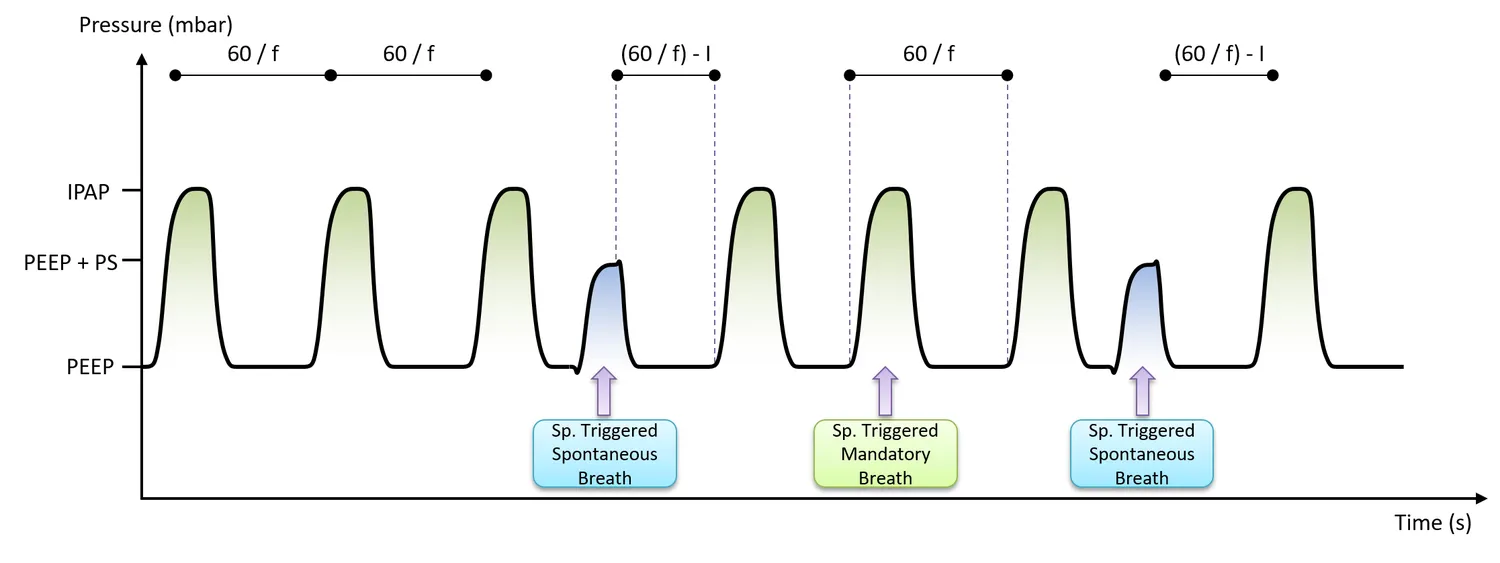
Synchronized intermittent mandatory ventilation, pressure-controlled. Mandatory breaths are synchronized to patient effort at a set rate; spontaneous breaths in between receive pressure support.
Waveforms
Physiological basis
SIMV delivers mandatory breaths at a set frequency while allowing spontaneous breathing during expiration, aligning the patient’s effort with the mandatory cycle.
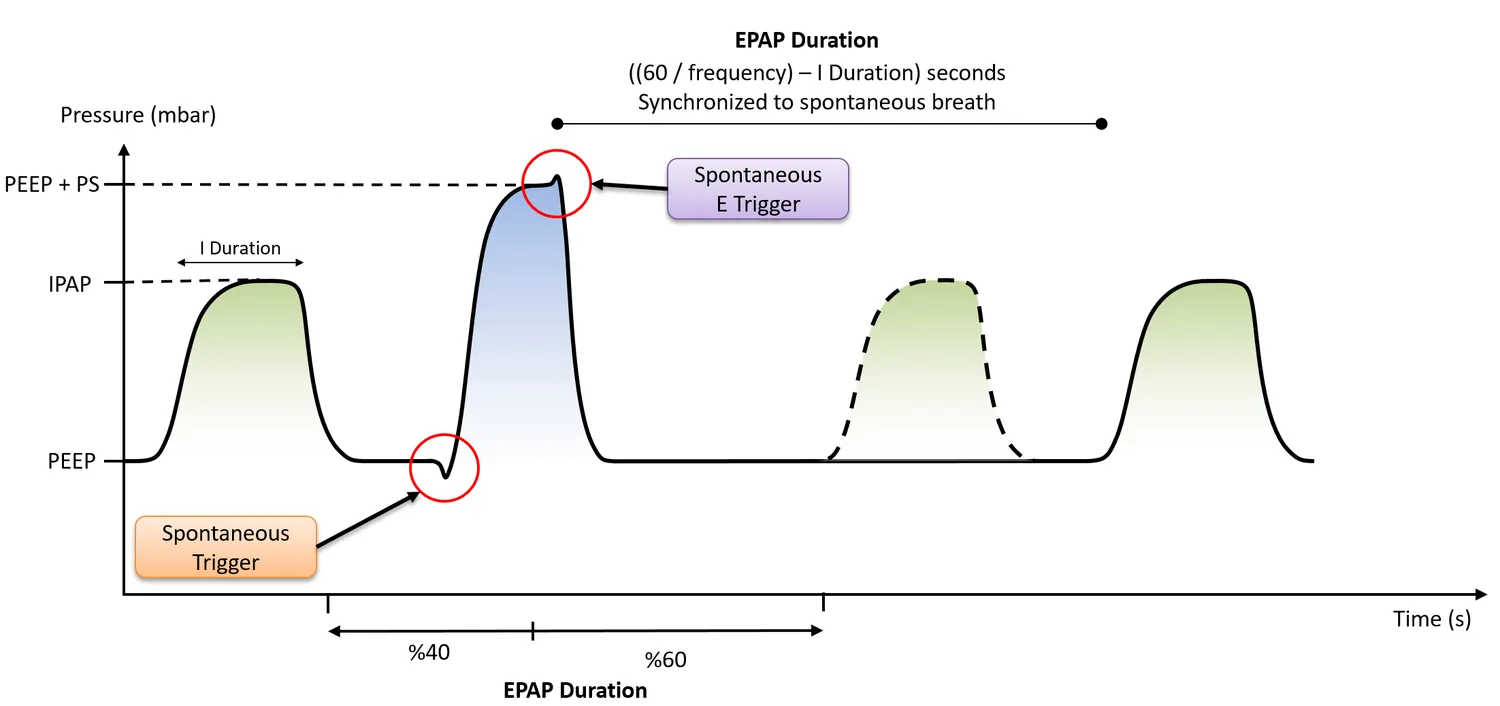
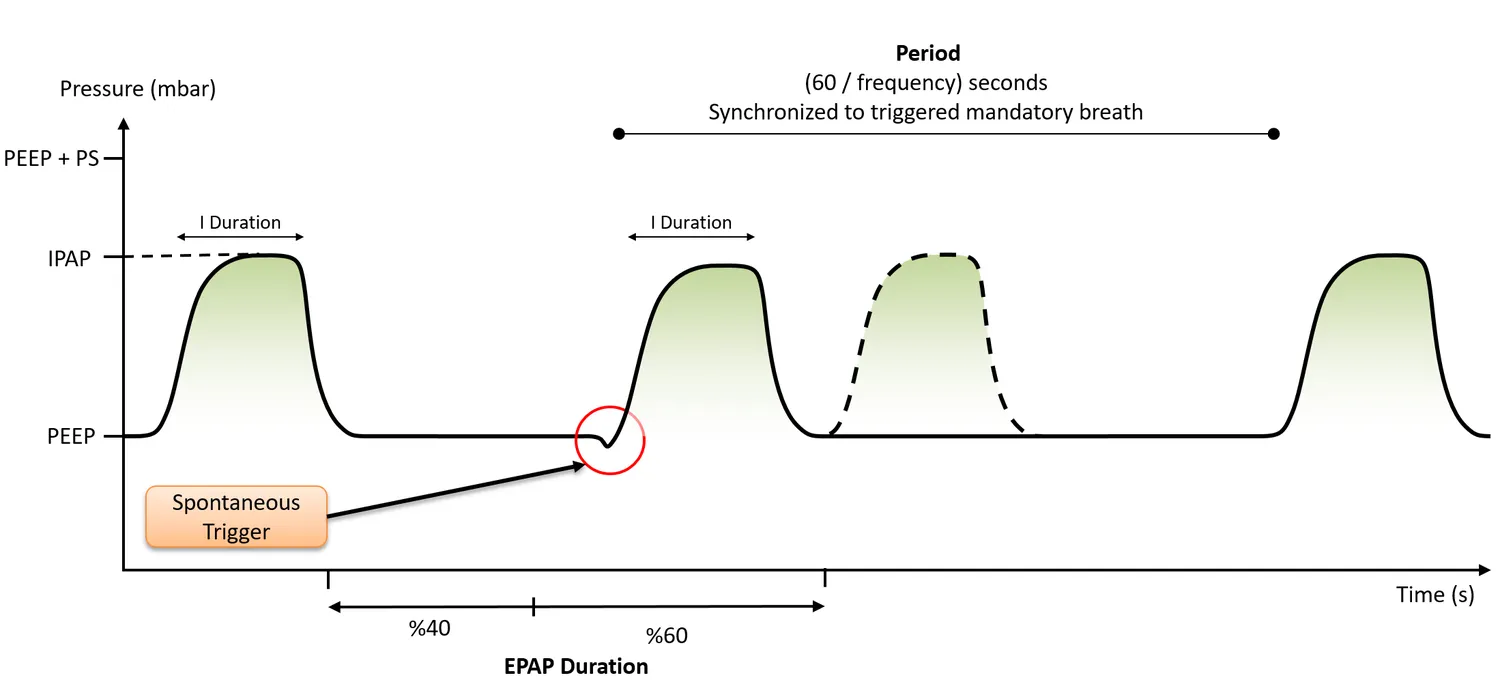
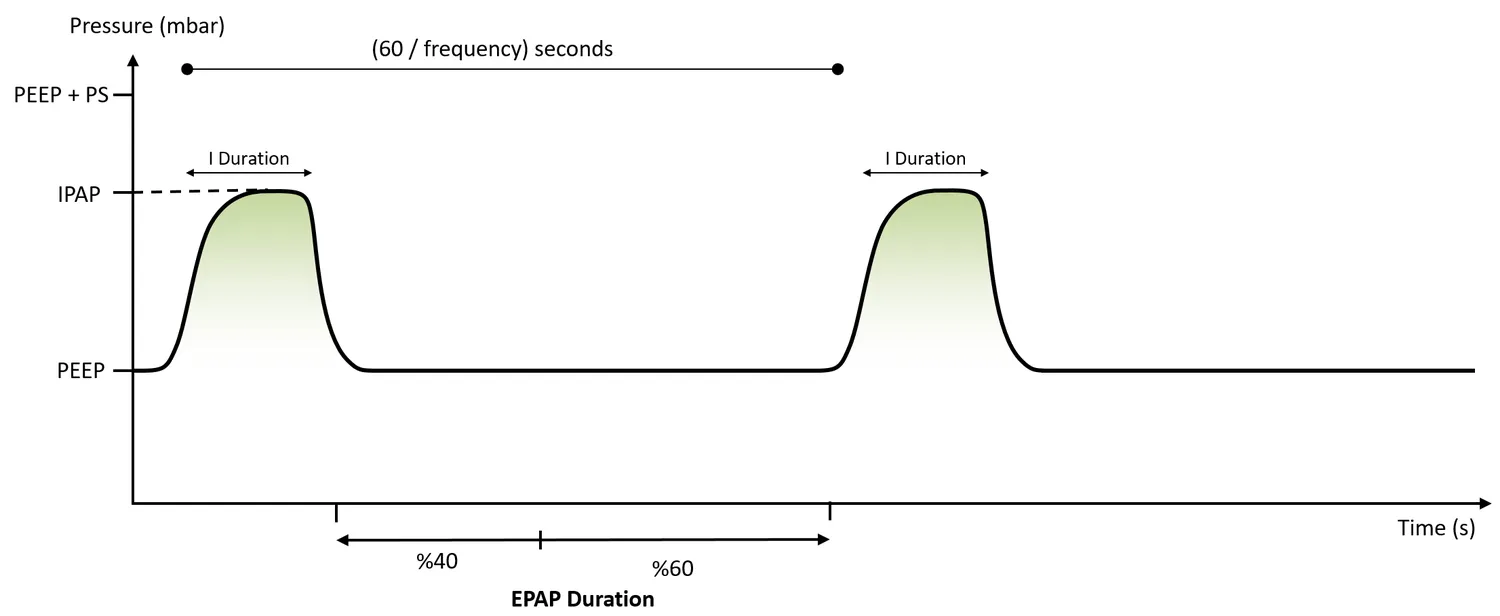
In Ventisense the SIMV algorithm splits the EPAP duration into two windows. In the first 40% — the spontaneous window — a detected effort is supported with pressure support (PS) and the patient exhales by their own effort. In the final 60% — the mandatory window — a detected effort is treated as a mandatory breath and supported with IPAP (SIMV-P). If no effort occurs, the device delivers fully mandatory breaths at the set rate.
Adjustable parameters 11
Inspiratory pressure for mandatory breaths.
Positive end-expiratory pressure.
Required number of breaths per minute.
Inspiration time of mandatory breaths.
Support pressure added to spontaneous breaths, on top of PEEP.
Rate of pressure rise.
Spontaneous effort detection threshold.
Expiration-start criterion for spontaneous breaths (5%–100%).
Early re-triggering prevention.
Inspiration-time limits in spontaneous breathing.
Atelectasis prevention: a periodic deep breath.